
Market Guide · Bangalore 2026
Is Bangalore Good to Live or Invest In? A 2026 Answer With the Numbers
2026 prices, rental yields, unsold stock, best areas to invest in Bangalore and the honest trade-offs, in one guide.
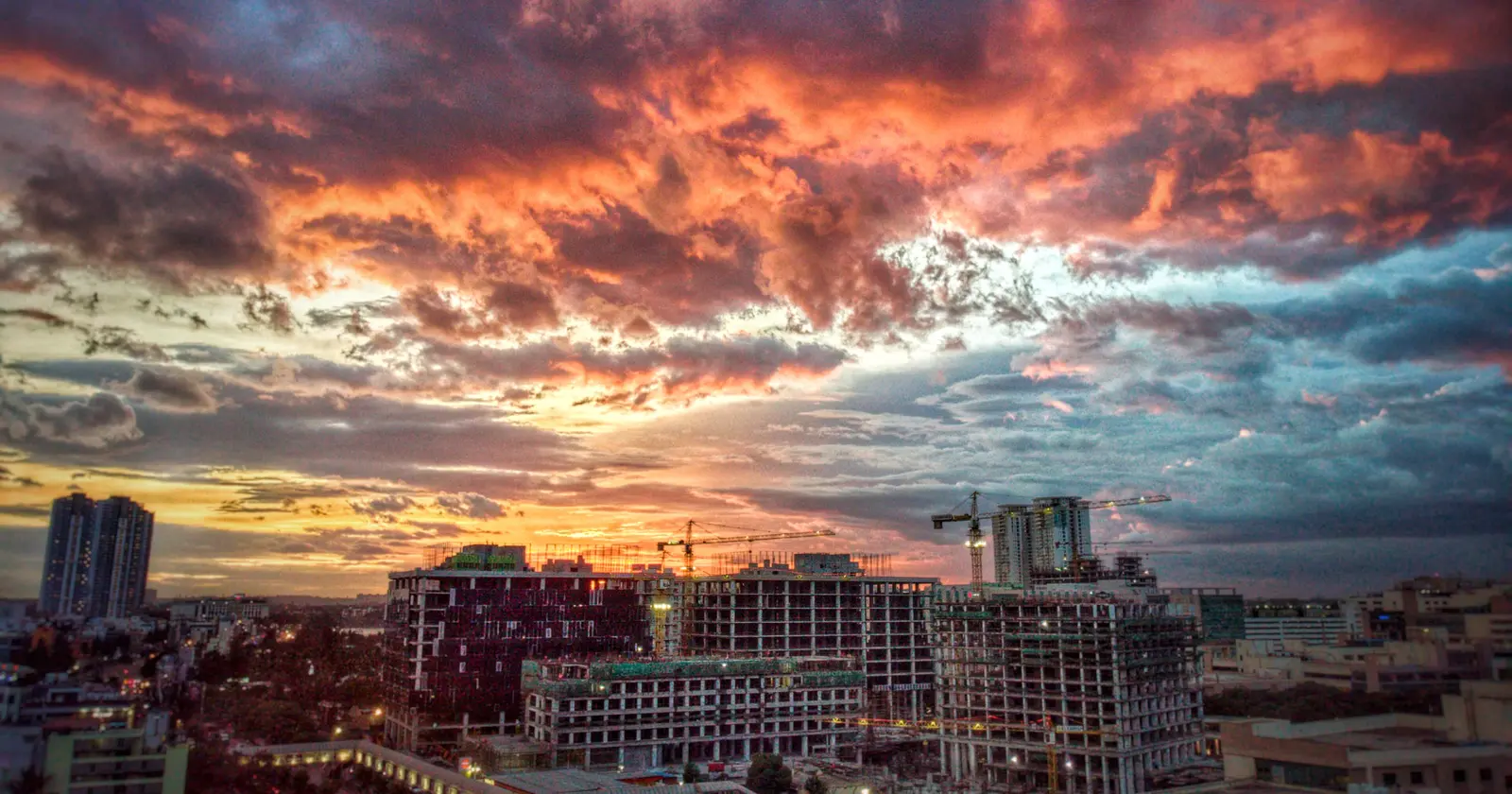
Is Bangalore good to live or invest in? Yes on both counts, with conditions that matter more than the yes. Living here works when your income is earned here and your home sits within a sane commute of your office. Investing works when you buy in a corridor with a funded growth driver, hold for seven to ten years, and stop expecting rent to cover the EMI. This guide puts the 2026 numbers behind that answer, covers the risks the developer blogs leave out, and gives you a way to work out which side of the question you are on.
The short answer
- To live: one of the two or three best large cities in India for jobs, weather, schools and healthcare. The price is traffic, patchy water on the periphery, and rents that rose 8% in a year.
- To invest: prices rose about 9% in the year to June 2026 on Knight Frank’s count, and more than 60% over the three years before that on Anarock’s. Appreciation is the return. Rental yield is not.
- The catch: unsold stock is at a multi-year high and new launches are priced well above resale. 2026 is a good year to negotiate and a bad year to buy on fear of missing out.
Is Bangalore a good place to live in 2026?
What works. The city holds roughly a third of India’s global capability centres, and Knight Frank’s Q1 2026 index had prime office rents up 14% in a year, the steepest rise in Asia-Pacific. Those offices are why people keep arriving, and why housing demand has held through every slowdown headline. The climate is still the mildest of any Indian metro. For families, the school and hospital bench is deep: NPS, DPS, Inventure and Stonehill on one side, Manipal, Aster and Narayana on the other. The food, music and weekend scene is as varied as any city in the country.
What doesn’t. Traffic first. TomTom’s congestion index has placed Bengaluru among the three slowest cities in the world, with drivers losing well over 100 hours a year. Water second. The 2024 summer shortage is still fresh; Cauvery Stage V has improved supply in the core since late 2024, but many gated projects on the periphery still run on borewells and tankers. The cost of living in Bangalore is the third issue. A 1 BHK in the city now rents for ₹20,000 to ₹45,000 a month, a 2 BHK near Whitefield or Sarjapur Road for ₹30,000 to ₹48,000 on Anarock’s Q3 2026 data, and a single professional spends ₹60,000 to ₹65,000 a month before any serious saving.
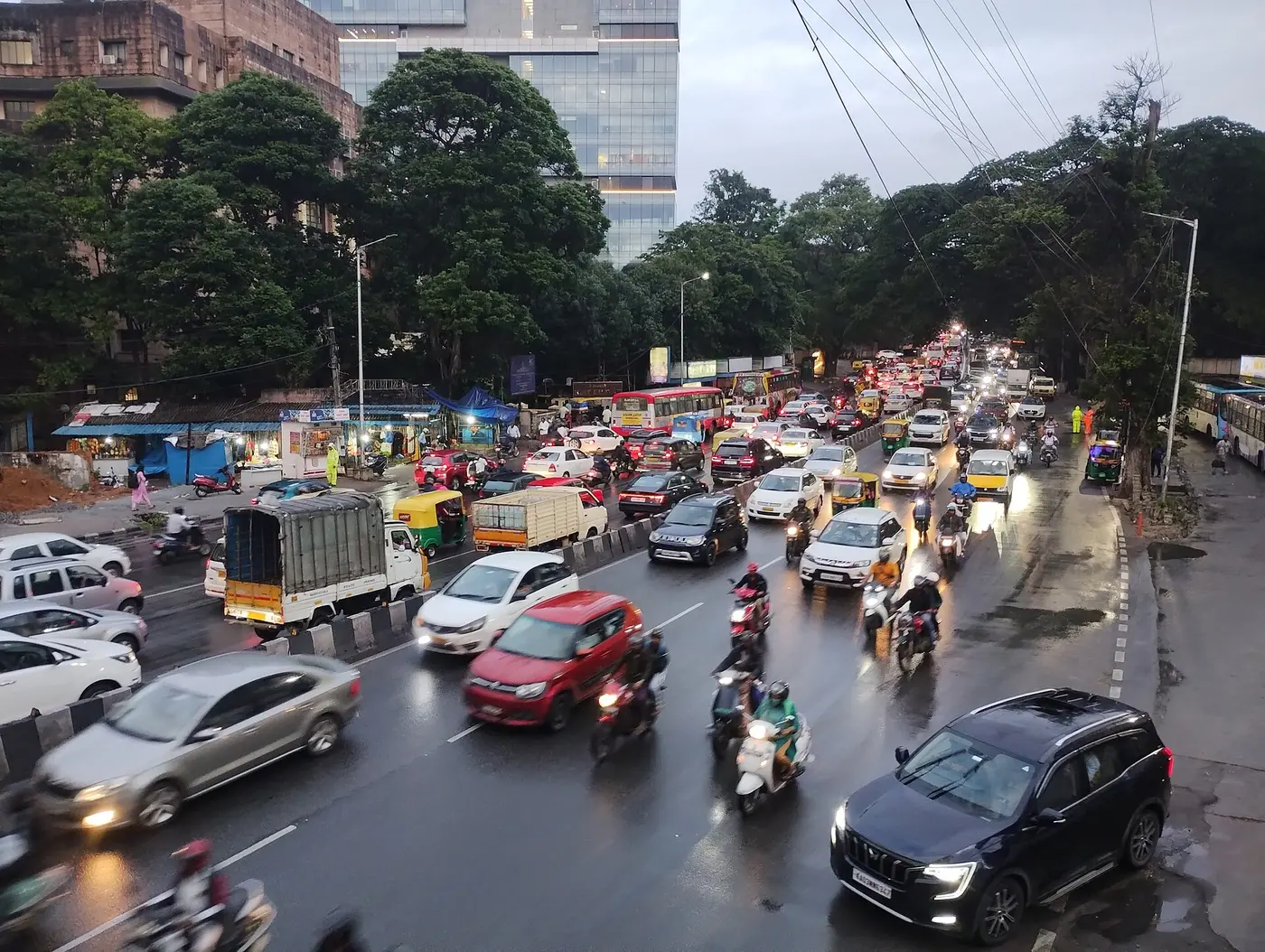
Living in Bangalore pros and cons reduce to one variable: where you sit relative to where you work. People who solve the commute first and the house second tend to like the city. People who do it the other way round write the Reddit threads.
Is Bangalore good for investment? What the 2026 data says
The appreciation record is strong and well documented:
- Knight Frank’s H1 2026 report puts the city’s average price at ₹9,354 per sq ft, up 9% year on year, with sales up 5%, the best growth among the eight cities it tracks.
- Anarock’s tally has average housing prices up 63% over the three years to 2025.
- Knight Frank’s prime global index placed Bengaluru fourth among 46 world cities for luxury price growth, at 10.2%.
- JLL expects a further 10% to 12% rise through 2026.
- Prime IT corridors now quote ₹15,000 to ₹18,000 per sq ft; the city-wide asking average is about ₹12,400 (Square Yards, October 2026).
So anyone who chose to invest in Bangalore real estate in the last decade has done well. The useful question is whether the next decade repeats the last one, and three things say the Bangalore real estate investment case will look different: the base is higher, supply is heavier, and yields are thinner. Each is covered below.
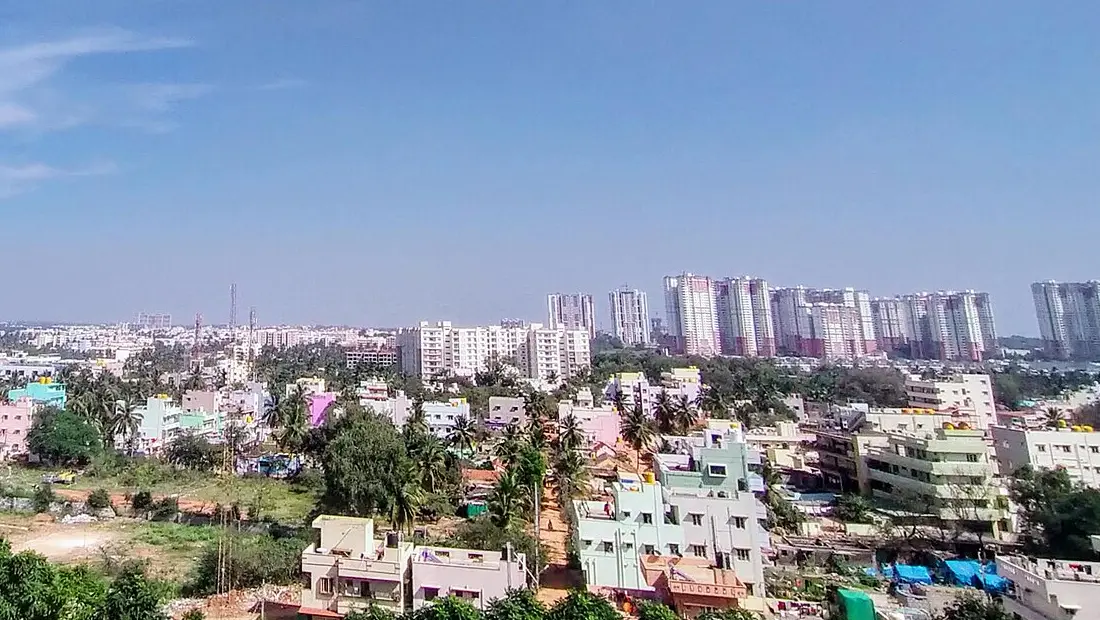
Bangalore property prices 2026, zone by zone
| Zone | Key localities | Indicative 2026 rate (₹/sq ft, apartments) | What drives it |
|---|---|---|---|
| Central | Indiranagar, Koramangala, Jayanagar | 15,000 – 22,000+ | Scarcity, lifestyle, old money |
| East | Whitefield, Sarjapur Road, Panathur, Varthur | 9,000 – 18,000 | ORR tech parks, Purple Line |
| North | Hebbal, Yelahanka, Thanisandra, Devanahalli | 5,500 – 14,000 | Airport, Aerospace Park, Blue Line, villa land |
| South | Bannerghatta Road, Kanakapura Road, Electronic City | 6,000 – 14,600 | Value, Green and Yellow Lines, proposed second airport |
| West | RR Nagar, Mysore Road, Kengeri | 7,500 – 10,500 | Lowest entry, slowest appreciation |
Rates are indicative new-launch asking prices compiled from Knight Frank, Anarock and portal data. Resale typically sits 20% to 30% below new-launch asking, and villas price well above apartments on a per sq ft basis.
The spread between zones is widening, which is the single most important thing to understand about Bangalore property prices 2026: the city no longer moves as one market. Emerging corridors appreciate 15% to 20% a year from a lower base; mature pockets manage 5% to 8% from a high one.
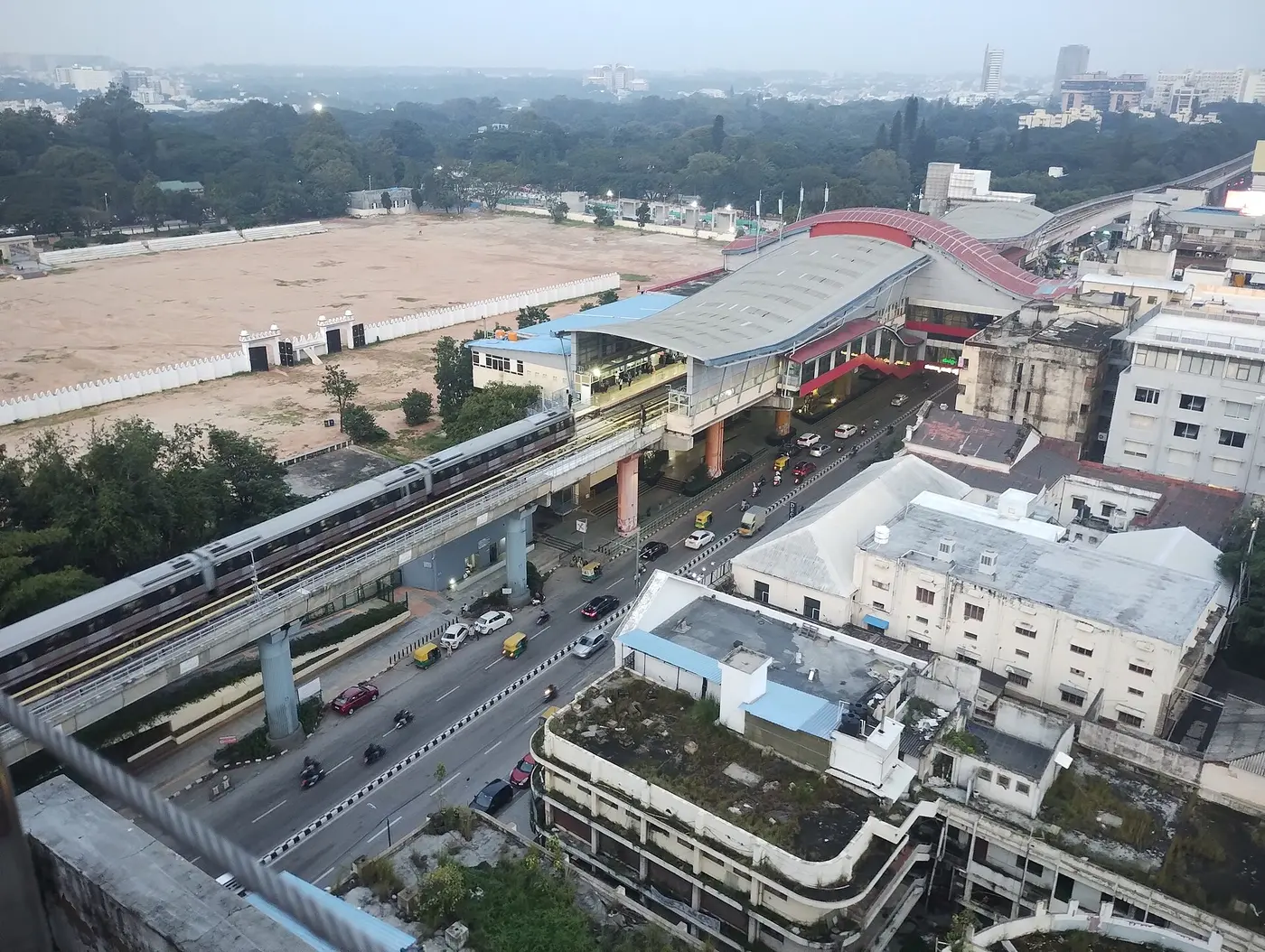
Rental yield in Bangalore: the number most blogs get wrong
Developer blogs quoting 8% to 9% yields are describing commercial property. Residential gross yields in Bangalore run 4% to 5% in the apartment-heavy east and south on Anarock’s Q3 2026 rents against asking rates, about 5% on Global Property Guide’s city-wide estimate, and 2% to 3.5% for premium homes and villas. Take off maintenance, vacancy, property tax and income tax, and the net yield in most projects is below a bank fixed deposit.
That is not an argument against buying. It is an argument against buying for the wrong reason. Rental yield in Bangalore will not pay your loan. The return comes from two places: the appreciation on the land under your home, and the rent you stop paying yourself. If neither applies to you, you are not investing, you are parking money.
The risks: unsold stock, overpricing and the bubble question
The Reddit thread asking whether Bangalore real estate is actually worth it anymore went viral in late 2025 for a reason. The concerns in it are real, and the 2026 data lets you size them:
- Unsold inventory. Knight Frank counted 74,299 unsold homes at the end of June 2026, up 22% in a year, the sharpest rise among the big eight cities. Anarock’s September figure is 80,200 units, up 35%, with a 15-month overhang. Nearly half of it sits in East Bangalore, and much of it in the ₹1.5 crore-plus bracket.
- Launch price versus resale. New projects routinely quote ₹20 lakh or more above comparable resale in the same pocket, and the ₹1 crore 2 BHK is now ordinary rather than exceptional.
- Yields, as above.
So, is Bangalore real estate worth it, or is the Bangalore real estate bubble about to pop? Prices have not fallen; a few oversupplied pockets corrected 2% to 3% while the city average rose. Demand is end-user and employer-led rather than speculative, and office absorption is still climbing. The one scenario that would break the market is large employers moving hiring out of the city, and nothing in 2026 points that way. What the inventory data does mean is leverage: this is a year to negotiate payment plans, waivers on floor-rise and car-park charges, and possession terms, not a year to pay list price because the sales executive said the next price revision is on Monday.
Best areas to invest in Bangalore in 2026
North Bangalore (Hebbal, Yelahanka, Thanisandra, Devanahalli, Bettahalsur–Tharahunise). North Bangalore real estate is the city’s appreciation play. Kempegowda International Airport, the KIADB Aerospace Park, Metro Blue Line Phase 2B, suburban rail Corridor 4 and the Satellite Town Ring Road all land here, and the zone supplied 46% of the city’s new homes in Q3 2026. Listing trackers put Devanahalli at roughly 20% and Yelahanka at 18% price growth over the last year. It is also the only belt where contiguous land for low-density homes still exists, which is why the luxury villas in North Bangalore launched in 2026 cluster between Yelahanka and the airport. For a project-by-project view, see our comparison of upcoming villa projects in North Bangalore.
East Bangalore (Whitefield, Sarjapur Road, Panathur, Varthur). The deepest rental market, the most tech parks and a live metro. Also the most unsold stock, so favour ready or near-ready homes from large developers and negotiate hard on launches.
South Bangalore (Bannerghatta Road, Kanakapura Road, Electronic City). The value zone. Electronic City pairs the lowest entry prices with the city’s best apartment yields; Kanakapura Road has a new story in the proposed second airport, though that is a decade-long thesis.
Central Bangalore (Indiranagar, Koramangala, Jayanagar). Buy to live, not to earn. Supply is frozen, percentage growth is slow and yields are the thinnest in the city.
Live or invest? How to decide
| Buy to live if | Buy to invest if | Rent and wait if |
|---|---|---|
| Your job is here for the next 5+ years | You can hold 7–10 years without needing the money | Your job may move cities within 3 years |
| The EMI is under 40% of take-home pay | You are buying land share, not a flat in a 2,000-unit tower | You need rental income to cover the EMI |
| You have driven the commute on a weekday evening | The corridor has a funded infrastructure driver, not a proposed one | Your only thesis is that prices always go up |
Most people who do well here fall into the first column and happen to land in the second. A home you live in, in a corridor that appreciates, is the Bangalore trade that has worked for twenty years.
What to check before you buy property in Bangalore
- RERA. The project number on the Karnataka RERA portal, the filed completion date (not the brochure’s), and the 70% escrow.
- Title and khata. Clean title, A-khata or e-khata, and for villas, land conversion and layout approval.
- Water. Cauvery connection or borewell? Rainwater harvesting and STP in place? Ask for the tanker spend per month in the most recent summer.
- Area. Compare on RERA carpet area, not built-up or super built-up. The gap is wider on villas than on apartments.
- All-in cost. GST at 5% on under-construction value, stamp duty of 5% to 6%, registration and cess, deposits, corpus and clubhouse charges. On a ₹14 crore base these add well over a crore, which is why we publish the all-inclusive working on our price page rather than a headline figure.
- Density. For a villa, units per acre and your plot’s position against open space matter more than the amenities list.
- Commute. Drive it at 6.30 pm on a Tuesday before you sign anything.
Where North Bangalore villas, and Embassy Riverine, fit this answer
If you want both halves of the question answered by one purchase, a home you will live in, in the corridor with the strongest appreciation case, the 2026 answer is a low-density villa in the airport belt. That is the segment we work in, and villas near Bangalore airport are where our own money would go on a ten-year view.
Embassy Riverine is the villa precinct of Embassy Group’s 85-acre Embassy Origins township at Tharahunise, 15 km from the airport: 217 independent 4, 4.5 and 5 BHK villas on about 50 acres, fewer than 4.5 homes to the acre, with the Embassy Riverine price starting at ₹14.10 crore for a 4 BHK on a 2,400 sq ft plot. The master plan keeps a natural stream open as the green spine, the amenities centre on a 40,000 sq ft clubhouse, and floor plans are issued per villa type. The location is the honest trade-off: this is a developing belt, retail and hospitals are thinner than in Yelahanka town, and the RERA-filed completion date is September 2032. We would rather you read our Embassy Riverine buyer’s guide before a site visit than after one. When you are ready, contact us for the live cost sheet and plot availability.
FAQ
Frequently Asked Questions
Yes on both, with conditions. Living works if your income is earned here and you keep the commute under control; investing works in corridors with a funded growth driver, held for seven to ten years, and bought for appreciation rather than rent.
Yes. Schools, hospitals, weather and safety are among the best of any Indian metro. Choose a home within 30 to 40 minutes of work and school, and check the project’s water source before anything else.
Prices have not fallen in twenty years, and 2026 data shows them up 8% to 9% with sales still growing. Unsold stock is at a multi-year high, though, so this is a buyer’s year for terms: if you will live in the home and the EMI fits, negotiate now rather than wait.
Gross residential yields are about 4% to 5% for apartments in the east and south, and 2% to 3.5% for premium homes and villas; net yields after maintenance, vacancy and tax are lower. Bangalore property is an appreciation and lifestyle purchase, not an income one.
North Bangalore for appreciation (the airport corridor: Hebbal, Yelahanka, Thanisandra, Devanahalli), East for rental depth (Whitefield, Sarjapur Road), and South for value (Electronic City, Bannerghatta Road, Kanakapura Road). Match the zone to your purpose.
The evidence says no. Prices track office absorption, GCC hiring and migration, all still rising in 2026. The real risk is overpaying at launch in an oversupplied pocket, not a city-wide crash.
A single professional spends roughly ₹60,000 to ₹65,000 a month including rent; a family of four with school fees, ₹1.3 to ₹1.6 lakh. Rent is the biggest line: ₹20,000 to ₹45,000 for a 1 BHK in the city and ₹30,000 to ₹48,000 for a 2 BHK near the tech corridors.
On a seven-to-ten-year hold, yes: it is the only belt where low-density villa land remains, and it carries the strongest infrastructure pipeline in the city. Expect low rental yield, long possession timelines and thinner social infrastructure today; buy for land share and your own use.
Contact Us
Embassy Riverine contact number
+91 63566 63535 (call or WhatsApp)WhatsApp
+91 63566 63535Site address
Embassy Origins, Chapparkallu Road, Tharahunise, Bettahalsur, Jala Hobli, Bengaluru 562157